


“Onomatopoeia” is a word that imitates or resembles the sound it describes. The word itself comes from two Greek terms: “onoma”, meaning “name,” and “poiein”, meaning “to make.” Together, it means “to make a name”.
Onomatopoeia in the Thai Language is called “สัทพจน์” (sàt thá phót), which refers to words that imitate natural sounds. These words are used to replicate the sounds of animals, objects, actions, or emotions in a way that mimics how we hear them in real life. Interestingly, onomatopoeic words may vary across languages. For example,
The onomatopoeia for a cat’s sound varies by language:
- Thai: เหมียว (mǐaw)
- English: Meow
- Chinese: 喵 (miāo)
- Japanese: ニャー (nyaa) or にゃん (nyan)
It’s truly amazing how language can capture the essence of sound!
The Various Categories of Onomatopoeia in Thai :
Onomatopoeia in Thai is divided into several categories based on the type of sound being imitated. Let’s break them down:

- Animal Sounds (เสียงสัตว์ : sǐaŋ sàt)
Animals make unique sounds, and Thai has special words to represent them. Here are some examples:
เหมียว (mǐaw) – the sound of a Cat (meow)
โฮ่ง (hôŋ) – the sound of a Dog (woof)
หึ่ง ( hʉ̀ŋ ) – the sound of a Bee (buzz)
แปร๋น (prɛ̌n) – the sound of an Elephant (trumpet)
จิ๊บๆ (jíp jíp) – the sound of a Bird (chirp)
ก้าบๆ (kâap kâap) – the sound of a Duck (quack)
เจี๊ยบๆ (jíap jíap) – the sound of a Chick (cheep)
กุ๊กๆ (kúk kúk) – the sound of a Rooster (cock-a-doodle-doo)
กะต๊ากๆ ( katáak katáak ) – the sound of a Hen (cluck)
มอๆ (mɔɔ mɔɔ) – the sound of a Cow (moo)
กาๆ (kaa kaa) – the sound of a Crow (caw)
อ๊บๆ ( ʔóp ʔóp ) – the sound of a Frog (ribbit)
ฮี้ๆ ( híi híi ) – the sound of a Horse (neigh)
เจี๊ยกๆ ( jíak jíak ) – the sound of a Monkey (chatter)
อู๊ดๆ (ʔúut ʔúut) – the sound of a Pig (oink)
จิ๊ดๆ (jít jít) – the sound of a Rat (squeak)
ฟ่อๆ (fɔ̂ɔ fɔ̂ɔ) – the sound of a Snake (hiss)
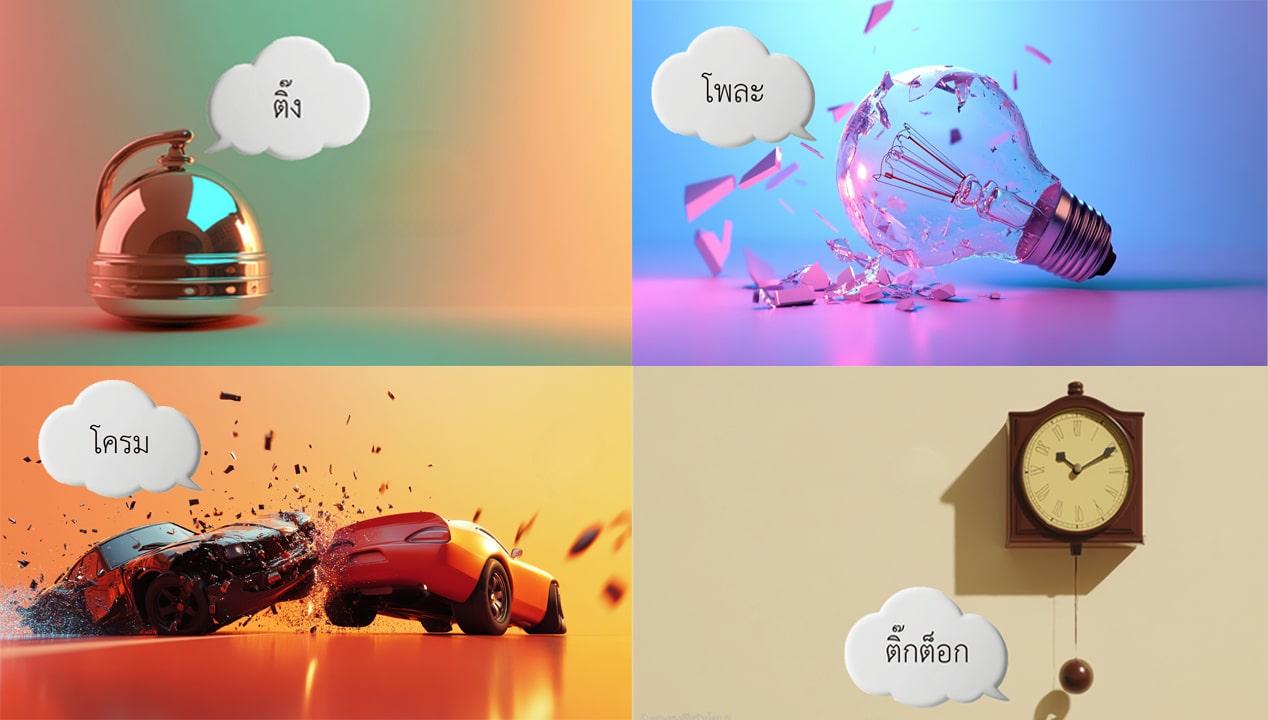
- Object / Action Sounds (เสียงจากสิ่งของ / การกระทำ)
Many everyday objects and actions produce sounds that are captured in the language. Here are some examples:
ติ๊กต็อก (tíktɔ̀k) – the sound of a clock (tick-tock)
บึ้ม (bʉ̂m) – the sound of the explosion (boom)
โพละ (phló) – the sound of something bursting, snapping, or breaking into pieces (crack, pop)
แกร๊ง ( krɛ́ɛŋ ) – the ringing sound of a metallic object (clang)
ก๊อกๆ (kɔ́k kɔ́k) – the sound of light knocking, tapping, or rapping, often on a door or surface (knock, tap)
กุกกัก (kùkkàk) – the sound of someone or something fumbling, rustling, or shifting objects (fumbling)
ฉึก (chʉ̀k) – the sound of something being stabbed, punctured, or pierced (stab, poke)
กรุ๊งกริ๊ง (krúŋkríŋ)– Jingling sound, like small bells or keys (jingle)
ฉ่า (chàa) – the sizzling sound of something frying or contacting with heat. (sizzle)
กรอบแกรบ (krɔ̀ɔp krɛ̀ɛp) – Crunching or crispy sound, like biting crispy chips (crunch)
แจ๊ะ (jɛ́) – the sound of something wet, overly moist or soaked (soggy)
เปรี๊ยะ (pría) – the sound of wood or ice cracking (crack)
ติ๊ง (tíŋ) – The chime of a small bell (ding)
โครม (khroom) – A loud collision sound (crash)
ครืดคราด (khrʉ̂ʉtkhrâat) – the sound of dragging heavy things (dragging, rumbling)
ฉับ (chàp) – the sound of cutting (snip)
โป๊ก (póok) – the sound of knocking on wood, hammering (knock, thump)
แคว่ก (khwɛ̂k) – the sound of something splitting (ripping, tearing)ตุ้บตั้บ (tûptâp) – the sound of stomping (stomp, thud)
พลั่ก (plâk) – the sound of smashing (smash, crash)
ปุ๋ง (pǔŋ ) /
ปู้ด (pûut) /
ป้าด (pâat) – The sound of air being released or farting (pffft, fart)
เพี้ยะ (phía) – Slapping sound (slap)
ปัง (paŋ) – the sound of something bursting, exploding, or hitting hard (boom, bang)
พึ่บ (phʉ̂p) – the sound of something soft landing or falling with a muted thud, like a person sitting down softly or a pillow dropping.
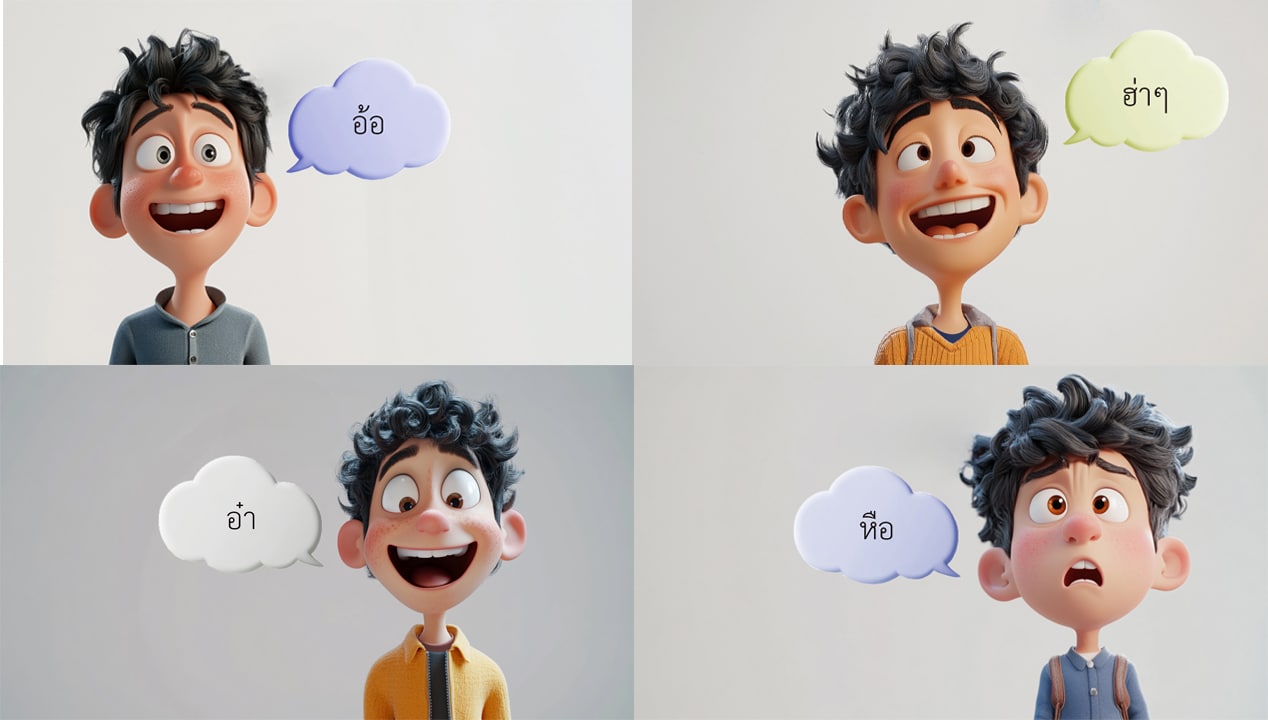
- Emotion / Behavior Sounds (เสียงจากอารมณ์ / พฤติกรรม)
Some onomatopoeic words represent emotional expressions or behaviors. Here are some examples:
ฮึ่ม (hʉ̂m)– the expression or sound showing someone grunting (grunt)
ฮ่าๆ (hâa hâa) – the sound of laughing (laugh)
เฮ่อ (hə̂ə) – the sound of exhalation, or deep breath, expressing relief, exasperation, or tiredness (sigh of relief, exasperation)
ซี้ด (síit ) – the sound that refers to something spicy
ฮัม (ham) – the expression of humming songs (hum)
เฮอะ (hə́) – the feeling of disappointment, irritation, or impatience (disappointment, irritation)
โอ๊ะ (ʔó) – the feeling of surprise (i.e Oh)
อืม (ʔʉʉm) – the sound showing thinking, uncertainty, hesitation, or thoughtfulness (thinking, hesitation)
โอ๊ย (ʔóoy) – the expression conveying pain, discomfort, or frustration (ouch, pain)
เอ๊ะ (ʔé) – the expression indicating surprise, confusion, or disbelief (huh, confusion)
หือ (hʉ̌ʉ) – the expression showing surprise, confusion, or a questioning reaction (huh, questioning)
วิ้ง (wíŋ) – the dizzy expression (dizzy)
อ้อ (ʔɔ̂ɔ) – the expression when someone suddenly understands, recalls or realizes something (oh, realization)
อ๋อ (ʔɔ̌ɔ) – the expression showing understanding or realization but with a more emphatic tone (oh, I see)
อ๋า (ʔǎa) – the expression showing shock, curiosity, or a moment of realization (oh, shock, curiosity)
จ๊อกๆ (jɔ́k jɔ́k) – the sound of a stomach growling or rumbling, usually due to hunger (growl, rumble)
จ้อกแจ้กจอแจ (jɔ̂kjɛ̂kjɔɔjɛɛ) – the sound of many people talking at once in an excited, loud, or noisy way, such as at a party or a busy gathering (chatter, babble)
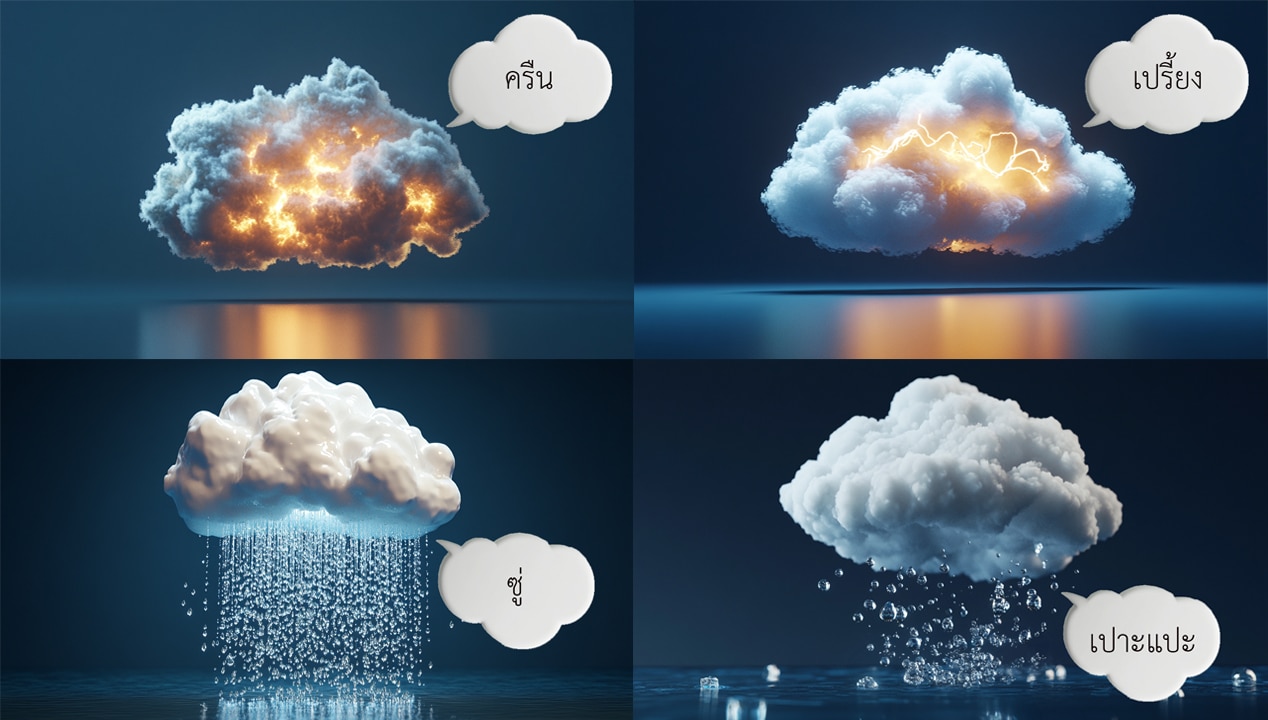
- Nature Sounds (เสียงจากธรรมชาติ)
Nature has its own symphony, which is often replicated in language. Here are 5 examples:
ครืน (khrʉʉn) – the sound of a heavy rumble or a deep, low sound, like thunder or a distant engine (rumble)
เปาะแปะ (pɔ̀pɛ̀) – the sound of light drops of water, like raindrops falling gently or something dripping (drip)
ติ๋ง (tǐŋ) – the sound of a water droplet falling from soaked clothes (plink)
จ๋อม (jɔ̌m) – the sound of something small dropping softly or lightly into the water, often used to describe a small object landing gently (plop)
ซู่ (sûu) – the sound of water flowing in a stream or a gentle breeze (whoosh)
เปรี้ยง (prîaŋ) – the sound of a loud burst like thunder or sudden collision (bang)
พรืด (phrʉ̂ʉt) – the sound of something rapidly skidding or sliding on a surface (scrape)
ฟึบ (fʉ̂p) – the sound of something deflating or losing air, like a balloon or a tire slowly letting air out (deflating)
Understanding onomatopoeia in Thai (สัทพจน์) gives language learners a fun and effective way to connect with the language.
At ALA Language School, we help students embrace the full spectrum of Thai, from its fascinating onomatopoeia to its rich cultural expressions. Learning these sounds will not only help improve your vocabulary but also allow you to connect more deeply with native speakers in various contexts. Ready to make your Thai learning experience more engaging? Join us today!


